
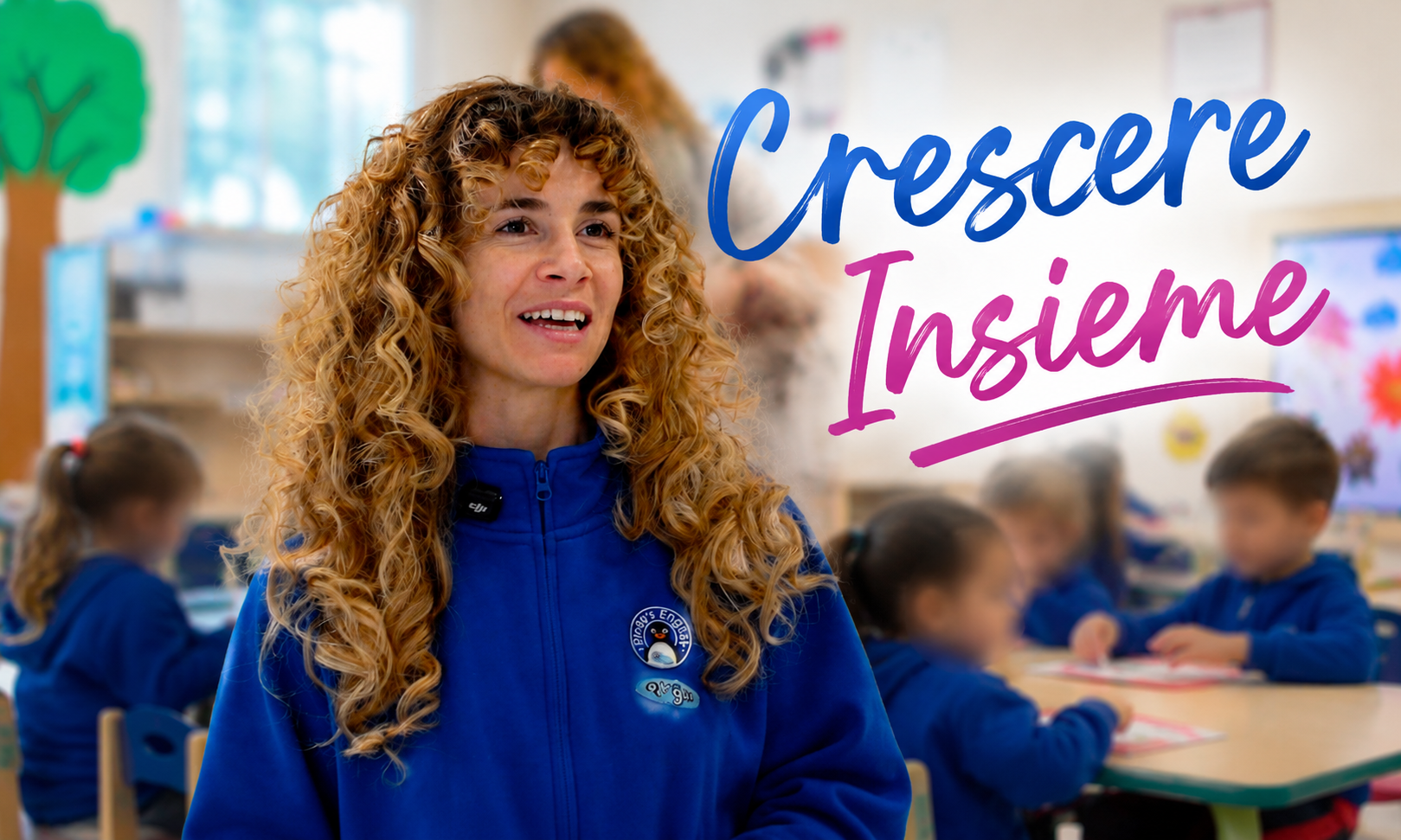
In questa intervista a Rosa Chiara De Simone, educatrice di Pingu’s English a Corigliano Rossano, emerge il racconto di una scuola dove inglese, natura, gioco e creatività accompagnano ogni momento della giornata. Un modello educativo moderno che mette al centro i bambini, le emozioni e la crescita personale fin dai primi anni.
 |
 |
 |
 |
«La giornata inizia con un’accoglienza calda e individuale: ogni bambino viene salutato per nome, in inglese. I primi momenti sono dedicati al gioco libero, segue il circle time, e poiattività strutturate, che possono essere STEM, arte, musica; l’utilizzo dei materiali Pingu’s English (supporto cartaceo e digitale); spesso vi è l’uscita all’aperto. Il pomeriggio è più tranquillo: riposo, attività creative o lettura».
What does a typical day look like at this school, from arrival to dismissal?
The day begins with a warm, individual welcome: each child is greeted by name in English. The first moments are spent in free play. This is followed by circle time, structured activities,which might include STEM, art, music; the use of Pingu’s English materials, and outdoor time. The afternoon is quieter: rest, creative activities or reading.
Qual è la prima cosa che colpisce un bambino quando entra qui per la prima volta?
«La prima cosa che li colpisce è l’ambiente: niente banchi in fila, niente cattedra al centro. C’è luce, colore, materiali a portata di mano, piante, libri sparsi, angoli accoglienti. I bambini si guardano intorno come se stessero esplorando un luogo nuovo e affascinante».
What is the first thing that strikes a child when they enter here for the first time?
«The first thing that strikes them is the environment: no rows of desks, no teacher’s desk front and center. There is light, colour, materials within reach, plants, books scattered around, cozy corners. Children look around as if exploring a fascinating new place».
L’inglese viene utilizzato per tutta la giornata: come reagiscono i bambini nei primi tempi?
«All’inizio c’è una fase di ascolto silenzioso, gli studiosi la chiamano “periodo silenzioso”, in cui il bambino assorbe senza ancora produrre. Alcuni si tranquillizzano subito grazie al tono della voce, alla coerenza dei gesti, alla routine visiva. Altri possono sentirsi un po’ disorientati, ma senza ansia, perché l’ambiente li sostiene. Non traduciamo mai: accompagniamo con oggetti reali, immagini, azioni. L’inglese diventa così un codice vivo e contestualizzato, non una materia astratta».
English is used throughout the day: how do children react in the early days?
«At first there is a phase of silent listening, researchers call it the “silent period”, during which the child absorbs without yet producing. Some settle quickly thanks to tone of voice, consistent gestures, and visual routines. Others may feel slightly disoriented, but without anxiety, because the environment supports them. We never translate: we accompany words with real objects, images, and actions. English becomes a living, contextualised code — not an abstract subject».
Quando iniziano a comprendere e a comunicare in modo naturale nella seconda lingua?
«Non c’è un momento preciso: è un processo graduale. Di solito, entro i primi due o tre mesi, i bambini iniziano a rispondere ai comandi semplici, a riconoscere le routine in inglese, a usare parole isolate. Poi arrivano le prime frasi, spesso miste, in quello che chiamiamo “code-switching”, e progressivamente la lingua si struttura. Quello che è certo è che i bambini non studiano l’inglese: lo vivono, e questo fa tutta la differenza».
When do they start to understand and communicate naturally in the second language?
«There is no precise moment: it is a gradual process. Usually within the first two or three months, children begin responding to simple commands, recognising English routines, and using isolated words. Then come the first phrases, often mixed, in what we call “code-switching”, and gradually the language takes shape. What is certain is that children do not study English: they live it, and that makes all the difference».
Il metodo unisce più approcci educativi: come li applicate concretamente durante le attività?
«Montessori ci dà la struttura dell’ambiente e il rispetto del ritmo individuale: ogni bambino sceglie il proprio lavoro, lo porta a termine, lo ripone. Reggio Emilia ci ispira nella documentazione del processo creativo e nell’ascolto profondo: le pareti raccontano i progetti in corso, i bambini sono co-protagonisti del sapere. L’approccio svedese, con la sua attenzione al benessere, alla natura e alla pedagogia del movimento, porta il nostro sguardo verso l’esterno e verso il corpo. I tre metodi non si contraddicono: si completano».
Your method combines several educational approaches: how do you apply them concretely during activities?
«Montessori gives us the structure of the environment and respect for individual rhythms: each child chooses their own work, completes it, and puts it away. Reggio Emilia inspires us in documenting the creative process and deep listening: the walls narrate ongoing projects, and children are co-protagonists of knowledge. The Swedish approach, with its focus on wellbeing, nature, and movement pedagogy, turns our gaze outward and toward the body. The three methods do not contradict one another — they complement each other».
Il gioco è centrale: che tipo di apprendimento nasce mentre i bambini giocano?
«Il gioco è il lavoro del bambino: questa frase di Maria Montessori è vera ogni giorno. Mentre giocano, i bambini costruiscono relazioni causali, sviluppano il linguaggio, negoziano regole sociali, sperimentano l’errore in modo sicuro. Nel gioco simbolico proiettano le proprie emozioni e le elaborano. Nel gioco costruttivo sviluppano pensiero spaziale e logico. Nel gioco di ruolo imparano l’empatia. Noi educatrici osserviamo, sosteniamo, proponiamo, ma non dirigiamo. Il gioco è sacro».
Play is central: what kind of learning emerges while children are playing?
Play is the child’s work: Maria Montessori’s phrase rings true every single day. While playing, children build causal relationships, develop language, negotiate social rules, and experience mistakes in a safe way. In symbolic play they project and process their emotions. In constructive play they develop spatial and logical thinking. In role-play they learn empathy. We educators observe, support, and suggest, but we do not direct. Play is sacred.
Le attività all’aperto fanno parte della routine: cosa succede durante queste esperienze?
«All’aperto i bambini diventano scienziati: osservano insetti, raccolgono foglie, misurano con i passi, costruiscono con i materiali naturali. Abbiamo adottato la filosofia della “forest school”nordica, per cui l’ambiente naturale è un’aula viva. Si impara anche in inglese: “Look at this! It’s a ladybug! How many spots can you count?”. Il corpo si muove, i sensi si attivano, le emozioni si calmano. Usciamo con qualsiasi tempo, con l’abbigliamento giusto: la pioggia, il vento, il freddo sono esperienze preziose».
Outdoor activities are part of the routine: what happens during these experiences?
«Outdoors, children become scientists: they observe insects, collect leaves, measure in footsteps, build with natural materials. We have adopted the Nordic forest school philosophy, where the natural environment is a living classroom. Learning continues in English: “Look at this! It’s a ladybug! How many spots can you count?”. Bodies move, senses activate, emotions settle. We go outside in any weather, with the right clothing: rain, wind, and cold are all valuable experiences».
Che differenza nota tra i bambini che frequentano questo percorso e altri più tradizionali?
«Non voglio fare confronti giudicanti, ma quello che osservo è una maggiore capacità di adattamento, una curiosità più viva e una tolleranza alla frustrazione più alta. I bambini che vivono in ambienti plurilingue e stimolanti sviluppano anche metacognizione: sanno ragionare su come stanno imparando. Hanno anche una relazione più serena con l’errore, perché qui l’errore non viene mai stigmatizzato. E la sicurezza emotiva che ne nasce li rende più aperti, più collaborativi, più creativi».
What difference do you notice between children who follow this path and those in more traditional settings?
«I don’t wish to make judgmental comparisons, but what I observe is a greater capacity for adaptation, a more vivid curiosity, and a higher tolerance for frustration. Children living in multilingual, stimulating environments also develop metacognition: they can reflect on how they are learning. They also have a more peaceful relationship with mistakes, because here mistakes are never stigmatised. The emotional security this creates makes them more open, more collaborative, more creative».
Le classi sono composte da pochi bambini: quanto aiuta questo nel seguirli uno per uno?
«È fondamentale. Con pochi bambini possiamo davvero osservare: vediamo chi è stanco, chi è incuriosito, chi ha bisogno di una parola in più o di silenzio. Possiamo adattare l’attività in tempo reale, senza dover aspettare che un bambino “si perda” per accorgermene. Ogni bambino ha una storia qui, un percorso riconoscibile. Non è un numero in una classe».
Classes are made up of few children: how much does this help in following each one individually?
«It is fundamental. With few children we can truly observe: we see who is tired, who is curious, who needs an extra word or some silence. We can adapt activities in real time, without waiting for a child to “fall behind” before I notice. Each child has a story here, a recognisable path. They are not a number in a classroom».
STEM, coding, arte e musica già dai tre anni: come vengono vissuti dai più piccoli?
«Con meraviglia e naturalezza. A tre anni il coding non è schermo e tastiera: è sequenza, è causa-effetto, è dare istruzioni a un robot da pavimento o costruire un labirinto. L’arte non è “fare il disegno”: è esplorare il colore, la texture, la materia. La musica è corpo, ritmo, ascolto. Le STEM sono domande: “Perché galleggia? Cosa succede se…?”. Noi proponiamo, i bambini rispondono con il fare. Non esistono discipline separate: tutto è interconnesso, come nella vita vera».
STEM, coding, art, and music from age three: how do the youngest children experience these?
«With wonder and naturalness. At three years old, coding is not screens and keyboards: it is sequence, cause-and-effect, giving instructions to a floor robot or building a maze. Art is not “drawing a picture”: it is exploring colour, texture, and material. Music is body, rhythm, listening. STEM is questions: “Why does it float? What happens if…?”. We propose, children respond by doing. There are no separate disciplines: everything is interconnected, as in real life».
Che ruolo ha la relazione con le famiglie nel vostro lavoro quotidiano?
«Le famiglie sono partner, non utenti. Condividiamo i lavori dei bambini, li invitiamo a partecipare ai progetti, organizziamo momenti di incontro. La comunicazione è quotidiana.Crediamo che la coerenza tra scuola e casa sia uno degli elementi più potenti per il benessere del bambino. Quando i genitori capiscono il nostro approccio e lo sentono proprio, il bambino cresce in un mondo che parla una sola lingua educativa».
What role does the relationship with families play in your daily work?
«Families are partners, not clients. We share children’s works, invite them to participate in projects, and organise meeting moments. Communication is daily. We believe that consistency between school and home is one of the most powerful elements for a child’s wellbeing. When parents understand our approach and feel it as their own, the child grows in a world that speaks a single educational language».
C’è un momento della giornata che rappresenta meglio lo spirito di questa scuola?
«Sì: il circle time del mattino. Ci sediamo tutti insieme, bambini e insegnanti, in cerchio sul tappeto. Cantiamo la canzone del buongiorno in inglese, parliamo del tempo, contiamo i presenti, condividiamo un pensiero o una storia. In quel cerchio c’è tutto: la comunità, la ritualità rassicurante, l’ascolto reciproco. I bambini sanno che in quel momento appartengono a qualcosa. È il cuore della giornata».
Is there a moment in the day that best represents the spirit of this school?
«Yes: the morning circle time. We all sit together in a circle on the carpet. We sing the good morning song in English, talk about the weather, count who is present, share a thought or a story. In that circle everything is present: community, reassuring ritual, mutual listening. Children know that in that moment they belong to something. It is the heart of the day».
Qual è la soddisfazione più grande che prova nel suo lavoro qui?
«Vedere un bambino che a settembre non capiva una parola di inglese, e a maggio chiede “Can I have more?” con la stessa naturalezza con cui chiede la merenda in italiano. Oppure vedere un bambino che a settembre non riusciva a stare nel gruppo e a maggio aiuta un compagno nuovo a trovare il suo posto. Sono quelle trasformazioni silenziose, quotidiane, che non finiscono mai di emozionarmi. Questo lavoro è un privilegio enorme».
What is the greatest satisfaction you experience in your work here?
«Seeing a child who in September did not understand a word of English, and by May asks “Can I have more?” with the same naturalness as asking for a snack in Italian. Or seeing a child who in September struggled to be part of the group, and by May is helping a new classmate find their place. It is those silent, daily transformations that never stop moving me. This work is an enormous privilege».
Se dovesse raccontare questa esperienza a un genitore che non la conosce, cosa direbbe?
«Direi: venite a vederla. Le parole non bastano. Ma se devo provare, dico che questa non è semplicemente una scuola bilingue né solo una scuola Montessori. È un luogo dove i bambini vengono accolti per ciò che sono, dove imparano due lingue senza accorgersene, dove il corpo, la mente e il cuore crescono insieme. Dove l’errore è parte del percorso e la curiosità non viene mai spenta. È un tipo di infanzia ricca, libera, piena di meraviglia».
If you had to describe this experience to a parent who knows nothing about it, what would you say?
«I would say: come and see it. Words are not enough. But if I must try, I would say that this is not simply a bilingual school, nor only a Montessori school. It is a place where children are welcomed for who they are, where they learn two languages without realising it, where body, mind, and heart grow together. Where mistakes are part of the journey and curiosity is never extinguished. It is a very special kind of childhood: rich, free, and full of wonder».